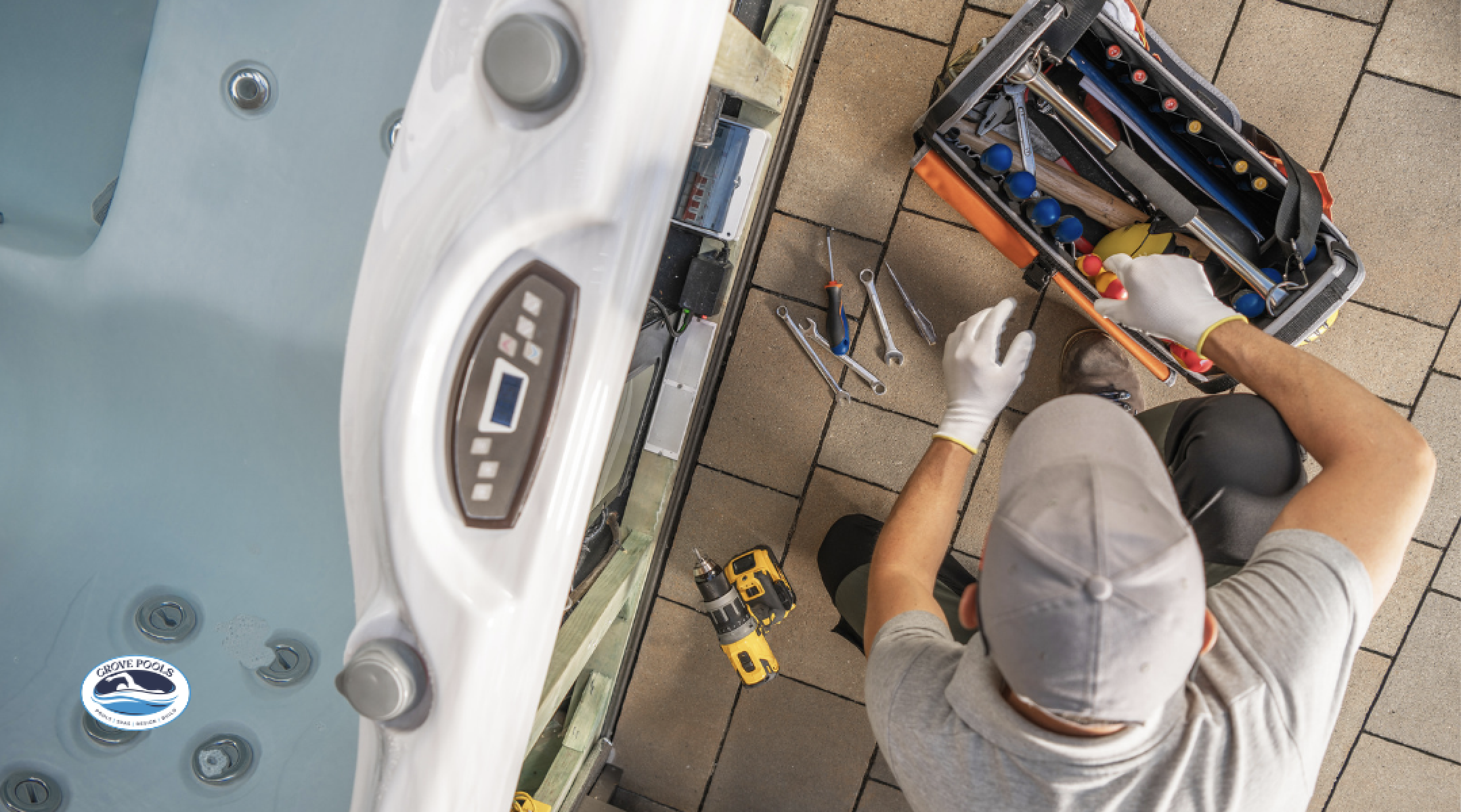
You lower yourself into the water after a long day, hit the jets button, and get a weak gurgle.
When hot tub jets are not working, it’s one of the most common calls we get from homeowners around Hagerstown.
The good news is that weak or dead jets don’t always mean an expensive repair. Many jet problems come from simple issues like a low water level or a filter that needs cleaning.
This guide covers the most common causes, what you can safely check yourself, and when to bring in the hot tub service and repair team at Grove Pools.
Common Reasons Hot Tub Jets Stop Working
Hot tub jets rely on a simple chain: water flows through the filter, the pump pushes it through the plumbing, and the jets mix that water with air to create pressure. If any link in that chain breaks, jet performance drops. Here are the usual suspects.
Low Water Level or Closed Jets
The most overlooked cause of weak jets is low water. If the water level drops below the skimmer opening, the pump starts pulling in air instead of water. You’ll notice surging, sputtering, or jets that pulse on and off.
Water can drop faster than you’d think from evaporation, splash-out, and regular use, especially during hot summer stretches or dry winter air. Before you troubleshoot anything else, check that the water sits at the fill line your manufacturer recommends.
Also check that the jets themselves are open. Many jets can be adjusted or shut off, and diverter valves can send water to one seat and away from another. It’s easy to accidentally close a few jets and think the system is failing.
Airlocks and Closed Air Controls
An airlock happens when a pocket of air gets trapped in the plumbing or pump, usually right after you drain and refill.
Signs of an airlock include:
- The pump hums or runs but jets produce little or no pressure.
- Jets stop working right after a refill.
- Gurgling sounds from the equipment area.
Before assuming there’s an airlock, check the spa’s air controls. Many hot tubs have venturi valves or air knobs that mix air into the water flowing through the jets. If these controls are closed, the jets may feel less powerful even when water circulation is working normally. Opening them can restore the stronger, bubbling massage you’re used to.
Many owners’ manuals explain how to “burp” the pump by slightly loosening a fitting to let trapped air escape. Always turn off power at the breaker first, and if you’re not comfortable working around the equipment, leave it to one of our Grove Pools technicians.
Clogged or Dirty Hot Tub Jets
Over time, body oils, lotions, hair, minerals, and debris build up inside filters, plumbing lines, and the jets themselves. A clogged filter is one of the biggest causes of reduced flow, because the pump has to fight to pull water through it.
The CDC notes that maintaining steady water flow across the filter and replacing cartridge filters regularly are key parts of hot tub care. Those guidelines are written for public spas, but the same idea applies at home: a clean filter protects both your water and your equipment.
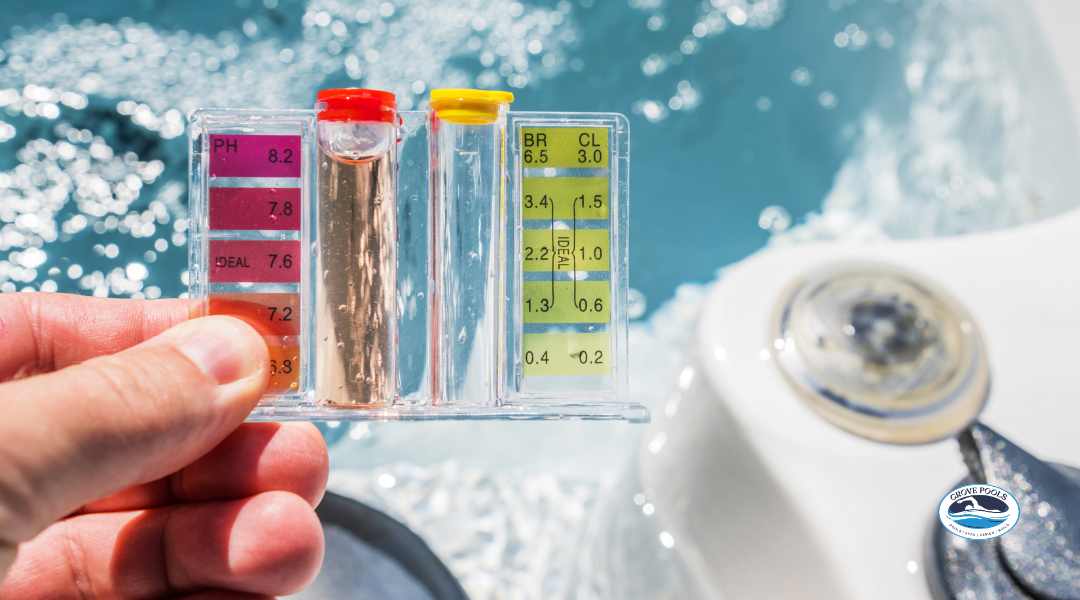
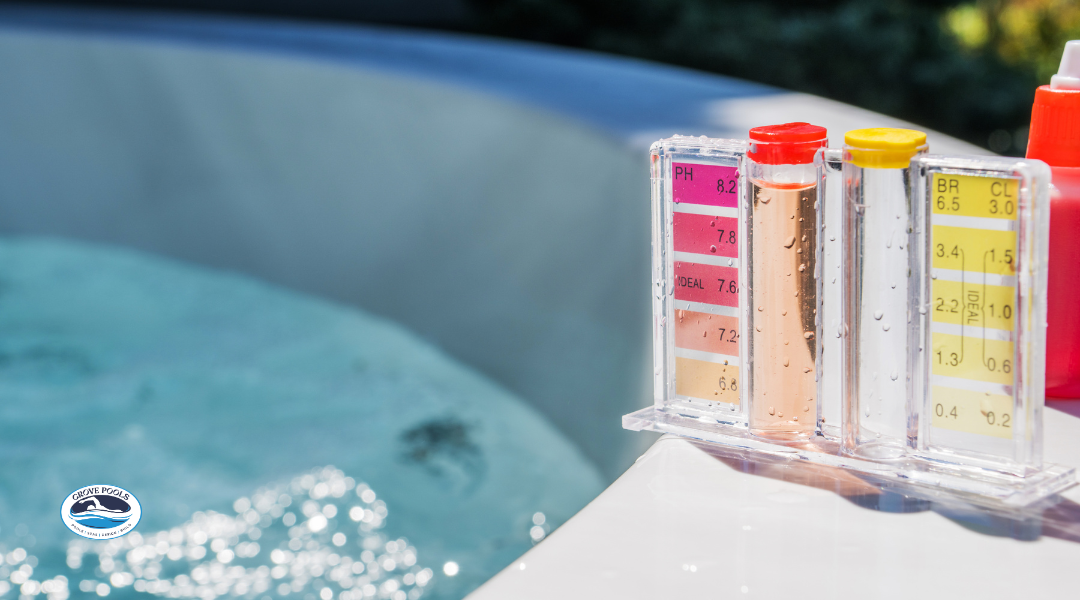
Unbalanced water chemistry makes clogging worse. High calcium or pH can leave scale inside jets and lines, so regular testing matters. If you’re not sure your readings are right, our guide on how to properly use a hot tub water test kit walks you through it.
Hot Tub Pump or Equipment Problems
When the pump isn’t moving water properly, even clean, fully open jets can lose pressure or stop working altogether. The sounds your pump makes and how it responds when you activate the jets can help identify the problem.
Common pump-related warning signs include:
- A humming sound but no water movement (sometimes caused by a seized motor or failed start capacitor).
- Loud grinding, screeching, or rattling.
- Jets that only work on low speed, not high.
- Water or moisture under the pump.
- The pump shutting off on its own or tripping the breaker.
Control panels, sensors, and relays can also stop the pump from getting the signal to run. If the jet button doesn’t respond at all, or you see an error code, the problem may be electrical rather than mechanical.
Damaged or Worn Jet Components
Jets are moving parts, and like any moving part, they wear out. Rotating jets can seize, faceplates can crack, internal bearings can wear, and gaskets can loosen.
You might notice one or two jets that won’t spin, won’t adjust, or leak air while the rest work fine.
UV exposure on uncovered spas, harsh chemicals, and years of use can contribute to deterioration of exposed components and seals.
If only a few jets are acting up while the rest of the spa runs normally, worn components are a likely cause.
Freeze Damage to Jets and Plumbing
Hagerstown’s freezing winter temperatures can cause serious damage to hot tubs that aren’t properly maintained or winterized.
When water freezes inside the plumbing, it expands and can crack jet bodies, split pipes, or damage pump components. Once the ice thaws, these damaged parts may leak or prevent water from reaching the jets.
Signs of freeze damage include weak or completely inactive jets, unexpected water loss, and leaks around the equipment cabinet.
If your hot tub was left without heat during freezing weather or wasn’t properly winterized, avoid running the pump until the system has been inspected. Our hot tub service and repair team can check for freeze-related damage and help you prepare your spa for colder weather.
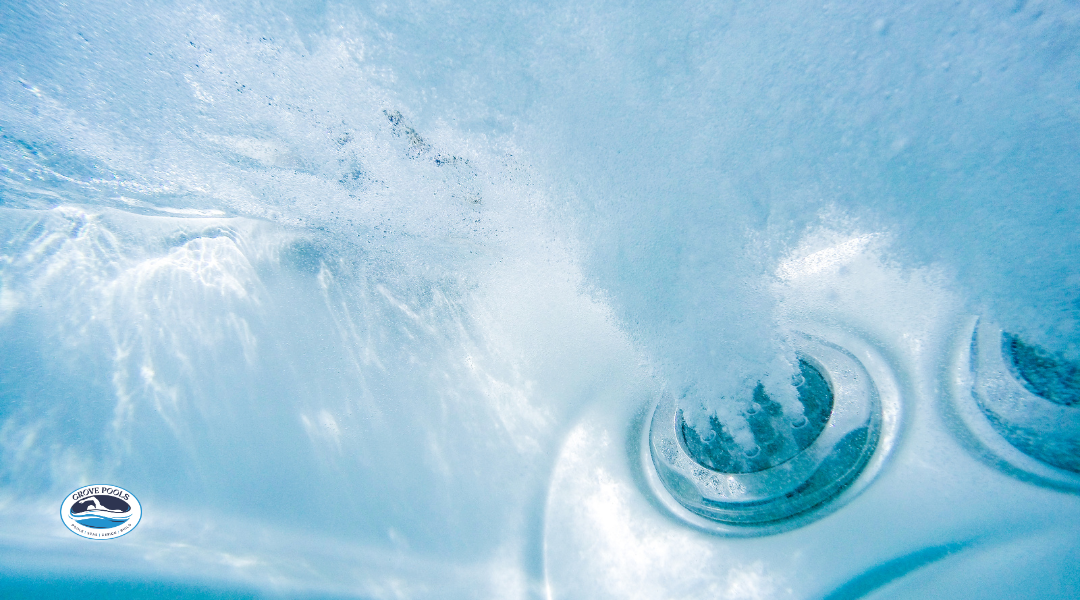
Can Cleaning Fix Hot Tub Jets That Aren’t Working?
Often, yes. If your jets are weak rather than completely dead, cleaning is the best first step.
Here’s a simple routine to try:
- Check the water level and top it off to the fill line.
- Open all jets and air controls, and check that diverter valves aren’t sending water away from the seats you’re using.
- Turn off power to the hot tub before removing the filter.
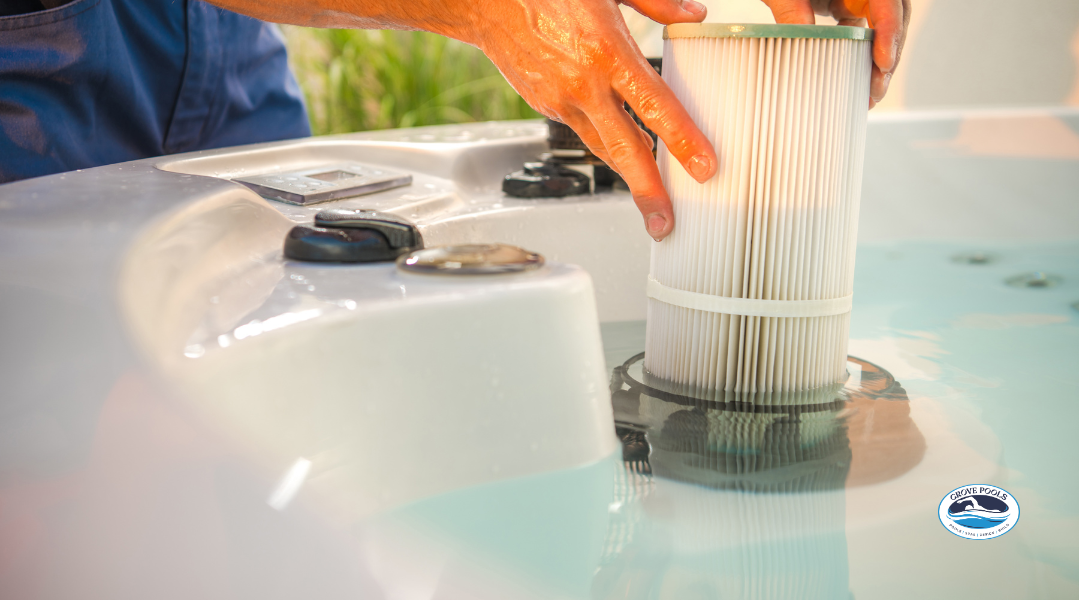
- Remove and rinse the filter. Use a garden hose to rinse between the pleats. If it’s been a while, soak it in a filter cleaner according to the manufacturer’s instructions.
- Replace the filter if it’s torn, flattened, or still dirty after a deep clean.
- Clean the jet faceplates. Many jets twist out so you can soak and scrub them. Follow your spa manufacturer’s removal instructions.
- Check and balance your water chemistry to help prevent future scale buildup.
- During your next scheduled drain and refill, use a spa plumbing line cleaner before draining to help remove buildup inside the lines. Follow the product instructions and balance the fresh water after refilling.
Seasonal care helps a lot here. Our hot tub maintenance guide covers how to check jets, plumbing, and circulation after the colder months, which is when a lot of jet issues first show up in Hagerstown.
If you’ve cleaned everything and the jets are still weak, or they never worked in the first place, the problem may be mechanical or electrical.
When Do Hot Tub Jets Need Professional Repair?
Call Grove Pools if you notice:
- The pump hums, grinds, or won’t start.
- Jets stay weak after you’ve cleaned the filter and checked for an airlock.
- Water is leaking around the pump, plumbing, or cabinet.
- The breaker or GFCI trips when the jets turn on.
- Error codes or an unresponsive control panel.
- Several jets failing at once, or jets losing pressure over a few weeks.
- Cracked plumbing, water loss, or other signs of freeze damage.
Electrical issues deserve extra caution. Faulty electrical equipment around pools and spas can create a serious shock hazard, and GFCI protection is an important safeguard. If your jet problem involves power, repeated breaker trips, or burning smells, stop using the hot tub, switch off power if it is safe to do so, and contact a qualified professional.
Hot Tub Jet Repair vs. Replacement: Which Do You Need?
Repair usually makes sense when the problem is limited to specific parts and the rest of the spa is in good shape. That might mean:
- Replacing one or more jet inserts, faceplates, or gaskets.
- Repairing or replacing a pump motor, seal, or wet end (the pump housing and impeller).
- Clearing a plumbing blockage or fixing a leaking fitting.
- Replacing a faulty relay, sensor, or control board.
Replacement is worth thinking about when repairs start stacking up.
If your spa is older, needs several major components at once, has ongoing leaks, or keeps breaking down, it may make more sense to put that money toward a new hot tub.
Our breakdown of how Strong Spas’ build quality lowers repair costs explains how construction and component quality can affect long-term maintenance expenses.
If you’re leaning toward an upgrade, you can shop Strong Spas hot tubs in Hagerstown or compare plug-and-play vs. hardwired hot tubs to find the right fit for your home.
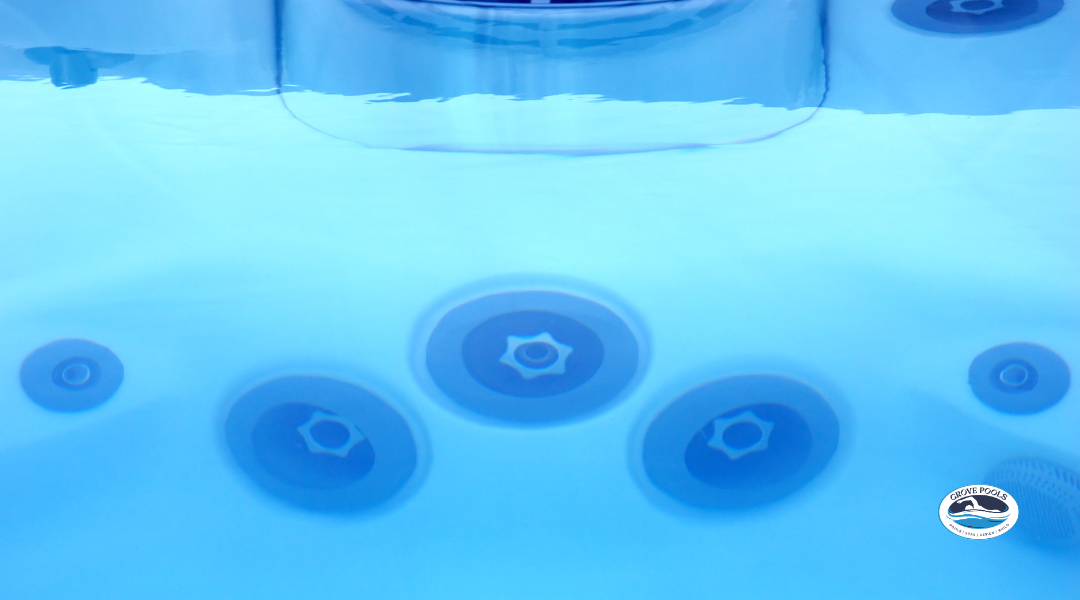
Get Your Hot Tub Jets Working Again With Grove Pools
Start with the basics: water level, open jets, and a clean filter. If that doesn’t help, let a trained technician find the real cause before a small issue becomes a bigger repair.
Grove Pools helps homeowners throughout the Hagerstown area with hot tub diagnostics, pump and jet repair, leak detection, and routine maintenance.
Our team will find the cause, explain your options clearly, and recommend the repair that makes the most sense for your spa.
Ready to get your jets back? Request a hot tub service call, call us at (301) 991-6018, or visit our showroom at 1044 Virginia Ave, Hagerstown, MD 21740.